NVIDIA GeForce GTX Titan X: Specifications, Performance & Review
Explore the NVIDIA GeForce GTX Titan X, featuring 12GB GDDR5 memory and Maxwell architecture. Discover its specifications, gaming performance, power requirements, and whether it's worth buying in 2026.
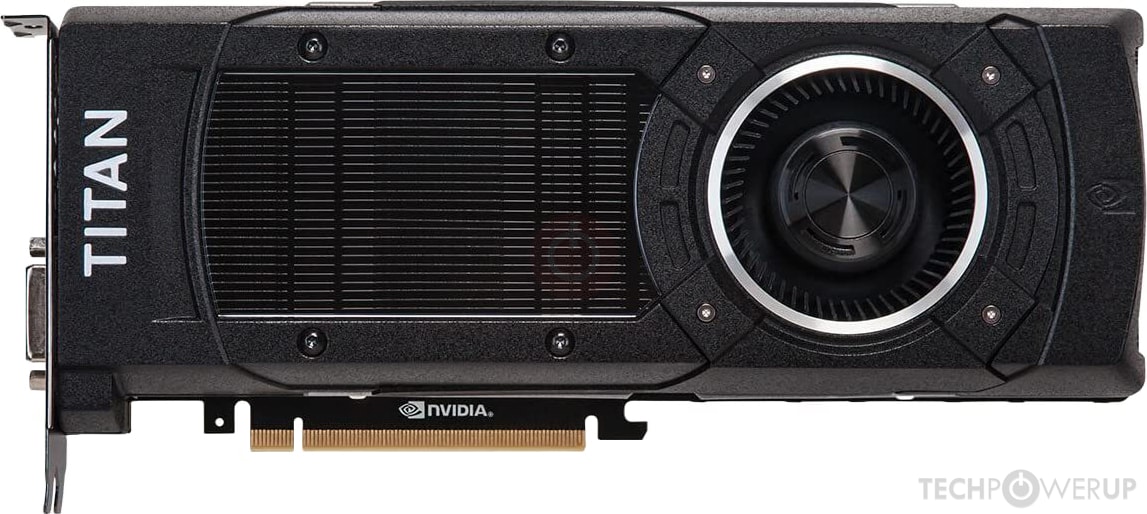
The NVIDIA GeForce GTX Titan X was a flagship graphics card released in March 2015. Based on NVIDIA's Maxwell architecture, it features 3,072 CUDA cores, 12GB of GDDR5 memory, and a 384-bit memory interface.
At launch, the Titan X was designed for high-end gaming, 3D rendering, and demanding graphics workloads. But how does this graphics card compare with modern GPUs, and is it still worth buying in 2026?
This guide covers the GTX Titan X specifications, gaming performance, power requirements, and driver support.
Table of Contents
- What Is the NVIDIA GeForce GTX Titan X?
- NVIDIA GTX Titan X Specifications
- GTX Titan X Gaming Performance
- Power Consumption and Requirements
- Titan X vs Titan X Pascal vs Titan Xp
- NVIDIA GTX Titan X Driver Support
- Is the GTX Titan X Worth Buying in 2026?
- Frequently Asked Questions
- Final Verdict
What Is the NVIDIA GeForce GTX Titan X?
The NVIDIA GeForce GTX Titan X is a high-end desktop graphics card launched on March 17, 2015.
It uses the GM200 GPU, built on NVIDIA's Maxwell architecture and manufactured using a 28nm process.
Its 12GB of GDDR5 memory and 3,072 CUDA cores made it one of the most powerful single-GPU graphics cards available when it launched.
The original GTX Titan X had a launch price of approximately $999.
NVIDIA GTX Titan X Specifications
Here are the main specifications of the original 2015 NVIDIA GeForce GTX Titan X.
| Specification | Details |
|---|---|
| Graphics Card | NVIDIA GeForce GTX Titan X |
| Release Date | March 17, 2015 |
| Architecture | Maxwell |
| GPU Chip | GM200 |
| Manufacturing Process | 28nm |
| CUDA Cores | 3,072 |
| Base Clock | 1,000 MHz |
| Boost Clock | 1,075 MHz |
| Video Memory | 12GB GDDR5 |
| Memory Speed | 7 Gbps |
| Memory Interface | 384-bit |
| Memory Bandwidth | 336.5 GB/s |
| Texture Mapping Units | 192 |
| Render Output Units | 96 |
| DirectX Support | DirectX 12, Feature Level 12_1 |
| OpenGL Support | 4.5 |
| Interface | PCI Express 3.0 |
| Graphics Card Power | 250W |
| Recommended System Power | 600W |
| Power Connectors | 1 x 6-pin + 1 x 8-pin |
| Maximum GPU Temperature | 91°C |
Specifications are based on NVIDIA's reference design. Some custom models may have different clock speeds and physical dimensions.
GTX Titan X Gaming Performance
When it launched, the GTX Titan X delivered excellent gaming performance and was particularly suitable for high-resolution gaming.
Its 12GB of video memory and powerful Maxwell GPU made it capable of handling demanding games of its generation.
The following results are from TechSpot's original 2015 graphics card review.
Historical Gaming Benchmarks
| Game | Resolution | Average FPS |
|---|---|---|
| Crysis 3 | 2560 x 1600 | 51 FPS |
| Crysis 3 | 3840 x 2160 | 26 FPS |
| BioShock Infinite | 2560 x 1600 | 96 FPS |
| BioShock Infinite | 3840 x 2160 | 49 FPS |
These are historical 2015 benchmark results, not modern game benchmarks. Actual performance varies by game, settings, and system configuration.
1080p, 1440p, and 4K Gaming
| Resolution | Expected Use |
|---|---|
| 1080p | Suitable for many older and less demanding games |
| 1440p | Capable in compatible games, depending on settings |
| 4K | Limited performance in demanding games; reduced settings may be necessary |
The GTX Titan X is no longer a recommended choice for demanding modern gaming. Newer graphics cards offer improved performance, efficiency, and features.
Power Consumption and Requirements
The GTX Titan X has a rated graphics card power of 250W.
NVIDIA recommends a 600W power supply for its reference configuration.
| Power Requirement | Specification |
|---|---|
| Graphics Card Power | 250W |
| Recommended PSU | 600W |
| 6-pin PCIe Connector | 1 |
| 8-pin PCIe Connector | 1 |
| Maximum GPU Temperature | 91°C |
Before installing this GPU, make sure your power supply has the required connectors and sufficient capacity.
Cooling is also important, particularly when purchasing a used graphics card that may have years of operating time.
Titan X vs Titan X Pascal vs Titan Xp
NVIDIA reused the Titan X name across multiple graphics card generations. The original Maxwell GTX Titan X is different from the later Pascal-based models.
| Specification | GTX Titan X (2015) | Titan X Pascal (2016) | Titan Xp (2017) |
|---|---|---|---|
| Architecture | Maxwell | Pascal | Pascal |
| GPU | GM200 | GP102 | GP102 |
| CUDA Cores | 3,072 | 3,584 | 3,840 |
| Memory | 12GB GDDR5 | 12GB GDDR5X | 12GB GDDR5X |
| Memory Interface | 384-bit | 384-bit | 384-bit |
| Memory Bandwidth | 336.5 GB/s | 480 GB/s | Higher than Titan X Pascal |
These are three different graphics cards. Check the exact model before purchasing a used Titan X.
NVIDIA GTX Titan X Driver Support
Driver support is an important consideration for the GTX Titan X in 2026.
NVIDIA ended regular GeForce Game Ready Driver updates for Maxwell-series graphics cards in October 2025.
According to NVIDIA's support policy, Maxwell GPUs will continue receiving critical security updates through October 2028.
This means the GTX Titan X can still work with compatible drivers and applications, but it no longer receives regular Game Ready optimizations, new features, and game-specific improvements.
You can read NVIDIA's official Maxwell, Pascal, and Volta driver support announcement.
Is the GTX Titan X Worth Buying in 2026?
The GTX Titan X may still be useful for specific workloads, but its age and limited driver support make it difficult to recommend for a new gaming PC.
Advantages
- 12GB of GDDR5 video memory.
- 3,072 CUDA cores.
- 384-bit memory interface.
- Capable of running many older games.
- Interesting option for older PC builds and hardware collectors.
Disadvantages
- Older Maxwell architecture.
- No regular Game Ready driver updates.
- Relatively high 250W power consumption.
- Limited performance in demanding modern games.
- Used graphics cards may have aging cooling components.
For most gamers building a new PC in 2026, a more recent graphics card is a better long-term choice.
Frequently Asked Questions
How much VRAM does the GTX Titan X have?
The original 2015 NVIDIA GeForce GTX Titan X comes with 12GB of GDDR5 video memory and a 384-bit memory interface.
When was the GTX Titan X released?
The NVIDIA GeForce GTX Titan X was released on March 17, 2015.
How many CUDA cores does the GTX Titan X have?
The original Maxwell-based GTX Titan X has 3,072 CUDA cores.
What is the power consumption of the GTX Titan X?
The graphics card has a rated power of 250W. NVIDIA recommends a 600W system power supply.
Does the GTX Titan X support DirectX 12?
Yes. The original GTX Titan X supports DirectX 12 with Feature Level 12_1.
Is the GTX Titan X good for gaming in 2026?
It can still run many older games, but it is not recommended for demanding modern games. Its aging architecture and discontinued Game Ready driver support are important limitations.
What is the difference between GTX Titan X and Titan X Pascal?
The original GTX Titan X uses the Maxwell architecture and 12GB of GDDR5 memory. The Titan X Pascal uses a newer Pascal GPU and 12GB of faster GDDR5X memory.
Final Verdict
The NVIDIA GeForce GTX Titan X was an impressive flagship graphics card when it launched in 2015. Its 3,072 CUDA cores, 12GB of GDDR5 memory, and Maxwell architecture made it a powerful option for enthusiasts.
In 2026, however, its age, power consumption, and limited driver support make it less suitable for modern gaming.
It can still be interesting for older PC builds, compatible applications, and hardware collectors. For a new gaming PC, a newer graphics card is generally the better investment.